In a report drawn up by Olle Schmidt (ALDE, SE) in reaction to the ECB’s annual report for 2007, MEPs highlight the “increased need for cooperation between central banks and supervisory authorities” and ask the ECB also to continue to improve its relationship with other central banks and relevant institutions. The report calls for the setting up of an EU framework for financial supervision closely involving the ECB.
Recognising the ECB had warned about the under-estimation of risk before the crisis, MEPs ask the Central Bank to examine how to improve “the correlation between such forward-looking warnings and market reactions” and to say what powers it needs to improve macro-prudential supervision in the euro area.
Economic and monetary developments
Parliament notes that the Treaty gives the ECB its goal of ensuring price stability, but also that of supporting EU economic policy, and that the two are not substitutable.
The report backs the ECB’s “two-pillar” approach to targeting price stability, which includes analysis of the M3 measure of money supply. It highlights the risks of asymmetric economic developments within the euro area and calls on the ECB to tackle these risks at an early stage. Respect by Member States of the Stability and Growth Pact, is among the strongest measures to protect against these risks.
Caution on interest rates
Given that expectations of economic growth have been revised downward, any further interest rate rises “should be undertaken with caution in order not to endanger economic growth” says Parliament, also emphasising the need for investment and structural reforms by Member States to support growth.
A close watch on exchange rates
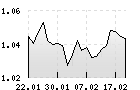
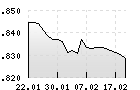
MEPs note the recent rise in the value of the euro against the US dollar in particular, and ask the ECB to monitor developments and take action if necessary. They invite the Eurogroup, Commission and ECB to step up their coordination on exchange rate policy.
Communicating with Parliament and the public
The report asks the ECB to provide Parliament and public with an annual summary of the measures it takes to improve its performance in line with Parliament’s annual resolution. MEPs were disappointed with “the low level of commitment” of the ECB’s response to last year’s resolution.
MEPs say that the ECB’s ex-post accountability via the monetary policy dialogue with Parliament is “of primordial importance for confidence, and hence stability, on the financial markets” and Parliament’s responsibility would increase if the ECB becomes a full institution, as proposed in the Lisbon Treaty.
More transparency on decision making?
While recognising the difficulties in making the Governing Council’s minutes public, Parliament calls for the ECB to elaborate clearly whether consensus was easily reached within the Council or if divergent views persisted.
Governing Council structure and Executive Board appointments
Parliament calls on the ECB to present its ideas for reforming the structure of the Governing Council, which will be ever more necessary as more countries join the euro area.
As for appointments to the Executive Board, MEPs stress that nationality should not be a factor, and that democratic accountability would improve if “the Council evaluated several potential candidates and if the candidate proposed by the Council were then subject to a vote of approval by Parliament.”
Unified international representation
The report also calls for specific steps to be taken towards “a unified euro area representation within international financial institutions such as the IMF.”
EP debates economic outlook with European Central Bank
MEPs discussed inflation, interest rates, financial supervision and the prospects for growth and jobs during their annual debate with the President of the European Central Bank.
Rapporteur Olle Schmidt (ALDE, SE) opened the debate by saying "The ECB has the wind in its sails, pressure had been put on the Bank due to turmoil in the markets and inflationary pressures. We should be grateful that the ECB was there to tackle inflation." The ECB, he recalled, had been existence for ten years and the euro zone economies had enjoyed a strong economic performance. "My country [Sweden] is interested in joining", he said.
He underlined the importance of increased transparency and openness: "There is room for improvement and the ECB, after expansion, should come forward with new proposals." Mr Schmidt said the ECB should reveal whether Governing Council meetings had taken decisions unanimously or whether there was more difficulty in finding a consensus. He added that the role of the ECB President to represent the euro area in international contexts should be strengthened.
The rapporteur recalled that inflation was at a record high of 4 per cent in the euro zone. There had to be a clear debate about exchange rates and large disparities between euro zone economies were undesirable. Overall, he said, the ECB was a mature institution and could deal with these challenges but, with, he said, the French President calling into question price stability objectives, national leaders should be having an open debate with the public on monetary policy.
ECB President: "strong determination to anchor inflation expectations"
European Central Bank President Jean-Claude Trichet said that growth in emerging countries should remain robust supporting in euro area demand in the months ahead and the euro area's fundamentals were sound with no major imbalance and the lowest unemployment for 25 years, but "uncertainty surrounding this outlook for growth remains high". Risks were related to further increases in commodity prices, further spill over from the financial market turmoil and increasing protectionist tendencies. Inflation, he said, had reached the "worrying level" of 4 per cent, and was likely to remain well above target for some time, moderating only gradually in 2009. Inflationary risks had intensified, he said, and included further rises in commodity prices, increases in indirect taxes or second round effects on prices and wages. "First signs are already emerging in some regions of the euro area. In this context, indexation schemes for nominal wages are of particular concern and should be avoided," he said.
The ECB had raised its main interest rate to 4.25pc. Its action, he said, "underlines our strong determination to maintain longer term inflation expectations in line with price stability." "The monetary policy stance will contribute to achieving price stability over the medium term. We will continue to monitor very closely all developments over the period ahead."
Mr Trichet welcome the recognition in the Schmidt report that publishing the minutes of Governing Council meetings was, as he put it, "not advisable when what counts is decision of college as a whole. It could lead to pressure on individuals to abandon their necessary whole-euro-area perspective. I see the Introductory Statement I present on behalf of the Governing Council at the monthly press conference as an equivalent to what other central banks call 'summary minutes'"
He said the economic differentials within the euro area were best tackled by "well designed structural reforms to enhance productivity and foster labour market flexibility."
Regarding financial market supervision, he said he saw no need to set up a new EU supervisory authority, but there was a need to strengthen information flows between central banks and market supervisors. "The envisaged reinforcement of EU legal basis for this is strongly supported by ECB."
Eurogroup Chair: fight against inflation is public's main concern
Jean-Claude Juncker, chair of the Eurogroup, stressed the "identity of views" between the EP report, the Eurogroup and the ECB, and said this was important given the "barrage of criticism directed at the ECB" over the world financial crisis. "The fight against inflation is the public's main concern" because of fears of "a loss of purchasing power", he argued. The ECB was complying with "its obligation to pursue price stability" although, he emphasised, governments also had a responsibility to support monetary policy through their economic policies, for example by preventing "an escalation of public sector wage levels".
The independence of the ECB was "a founding principle of EMU" and had been upheld in the Constitutional Treaty and the Lisbon Treaty. He advised against "sterile debates". Not that it was wrong to criticise or advise the Bank but one must be consistent and not ask the Bank "to pursue too many objectives" at once.
Lastly, Mr Juncker spoke of "ambiguities" in the Schmidt report. "Exchange rate policy is not the sole responsibility of the ECB", he maintained, but is "shared with national authorities". Moreover, the ECB is not the only institution responsible for the external representation of the euro: here too, there are "shared powers".
Political group speakers
For the EPP-ED group, Thomas Mann (DE) said the ECB had been right over 10 years always to pursue price stability and never to deviate from this objective. With high oil prices, this was now a major challenge.
Banks, he said, had found themselves in a difficult position after the sub-prime housing market collapse in the US. "The intervention by the ECB prevented a total crisis. Generally, ECB decision-making is transparent. We need to prevent national interests being pursued and prevent attacks on the ECB's independence." It was he said, time to heap praise on the ECB, it was in good hands with Jean-Claude Trichet.
Manuel António dos Santos (PES, PT) also supported the ECB's reaction to the financial market crisis: "If financial turmoil was not prevented, many of its effects were mitigated." A crisis, he said, does not have to be a disaster if you have the right leadership and up to date policies. It was not just about defending current rules, we needed to try to change the situation.
There was need for Greater cooperation among central banks and supervisory authorities and to remove regulatory gaps. There should be cooperation between the Eurogroup and ECB cooperation, and, he added, more transparency in decision making especially to make comprehensible to the public. "All action on interest rates should be taken very cautiously, preventing hasty action which could jeopardise growth."
For the ALDE group, Wolf Klinz (DE) said the ECB acted in able and confident manner at start of crisis: "You stand out as model of competence for other central banks, but the "most difficult phase yet to come." The risks of stagflation were real and we needed to ensure we get a grip on situation and avert risk, he said. The increase in rates had been the right reaction and fighting inflation was major concern.
Regarding transparency, he said "We want to know how decisions are taken, not names and votes, but to understand whether there was unanimity or more argument"
Claude Turmes (LU) spoke for the Greens/EFA group. He said price rises were "due to the entering of a new age; an age of scarcity. In the 21st century there will be hundreds of millions of new people entering the growing middle classes in places like China, India, Mexico and Brazil. [...] When the Chinese eat as much fish as the Japanese where will it come from? Or when the Indians are all driving cars where will the steel come from? When developing countries are consuming as much as developed countries currently do, where will the resources come from?" He said the real way to find a solution is to ask how we can make the European economy less dependent on imports of oil and gas and prices.
Johannes Blokland (NL), for the IND/DEM group, said the prospects were not favourable for next year: "The ECB would have to deal with a rising number of complaints, and the ECB would have to prove its metal in less favourable times". The euro zone would soon be composed of sixteen Member States all of whom have their own national economic policies. Mr Blokland questioned whether interest policy alone was a sufficient instrument to combat a recession.
Sergei Kozlík (NA, SK) said that the ECB had played a key role in ensuring a strong economic performance in the euro zone. However in these difficult times, he said, the citizen would likely to suffer the most. He said the ECB should play a greater role in supervision and national banks should work even more closely with the ECB. As in environment field, global co-operation was essential, he concluded.
The Chairwoman of the Economic and Monetary Affairs Committee, Pervenche Berès (PES, FR) said that everyone had paid tribute to ECB action in summer 2007. But, she asked, with inflation now at 4 per cent, interest rates up by a quarter-point and when Europe was importing inflation "is your strategy of vigilance possible to maintain when there are risks to growth and jobs?" It was time, she said to assess what tools were needed now the "first age of globalisation" with its downward pressure on prices was over.
She added that the euro area needed to speak with one voice and that there should be a structured dialogue on exchange rates between the world's major currency areas.
Ryszard Czarnecki (UEN, PL) saw a worrying trend in attempts to exert pressure on the ECB from across Europe. "Larger and more economically powerful member states are attempting to push their own agendas," he said, adding that "we cannot say Europe has a stable and finished financial system. It is still a work in progress."
Responses from Trichet and Juncker
Responding to the debate, Jean-Claude Trichet said he "enormously appreciated" remarks supporting independence of Central Bank. "It is because of very visible independence and primary mandate of price stability that we have been successful in anchoring inflationary expectations."
There was, he said, no contradiction in seeking stability of prices expectations and growth and job creation. It was generally agreed at global level that price stability paves way to sustainable growth and job creation.
"We insist always on stability and growth pact because overburdening of monetary policy by lax fiscal approach is a danger and we call on price setters in general to take account of medium term price stability and avoid second round effects. This applies to social partners too - we will deliver price stability in medium run."
"We need to remember what happened in 1973-4, those who let second round effects gallop ended up with inflation, low growth and the start of the mass unemployment we are fighting still today." Inflation hurt the poorest citizens most, he noted.
On oil and commodity prices, he said there was a triangle driving increases: demand from emerging markets, supply constraints and the "reallocation of capital at a global level in the direction of commodities." All sides of the triangle should be tackled: increasing energy efficiency, increasing supply capacity and ensuring that markets operated in the most transparent way possible.
On prudential supervision, he called for close cooperation between central banks and supervisory authorities, and said the current agreed plans for improvements should be implemented as a first priority.
On exchange rates, he stressed the need for caution in his comments, but said: "We agree with all G7 on message for China, and we also consider it important to look at adverse effect of excessive fluctuations. It is important too that US authorities have repeated that a strong dollar is in interests of USA."
In his reply to the debate, Eurogroup president Jean-Claude Juncker criticised the "wave of nostalgia for the 1970s and 1980s". The Eurogroup was being asked to "coordinate economic policy better" in its member countries but people should then not complain about the results. Under the reformed Stability and Growth Pact, with its greater emphasis on the "preventive side", governments were supposed to build up their reserves in the good times. Those that had done so now had greater financial leeway.
Mr Juncker also stressed that he had not called for a ban on wage increases, simply for wage growth to be linked to increases in productivity. In this connection he questioned the "exponential increase" in salaries drawn by some business leaders, notably in the financial services sector. These, he argued, "do not reflect productivity gains" and he asked are they "socially compatible"?
Returning to his earlier theme of fiscal responsibility, he said that countries which had consolidated their budgetary position in prosperous times were now able, for example, to fund social measures to help the less well-off cope with energy price rises.
He also noted that in the 1970s and 1980s there had been "galloping inflation, growing state deficits and, as a result, mass unemployment". Social benefits had been too high in some cases, as had taxes. The goal, he pointed out, was "inflation-free growth". Therefore "over-generosity on the social side" was undesirable. "We must think of future generations".
Parliament's rapporteur responds
Rapporteur Olle Schmidt in his response to the debate said that his experience in the 1990s as a politician in Sweden on the Parliament's Finance Committee had shown that low inflation and stable interest rates were important. Sweden, he pointed out, had suffered with mass unemployment and stagflation during the 1990s. The ECB should be commended and he repeated: "I hope that my country [Sweden] will join the euro zone." He concluded by thanking the Parliament for allowing him to be the rapporteur on the ECB 2007 annual report despite coming from a non euro zone country.